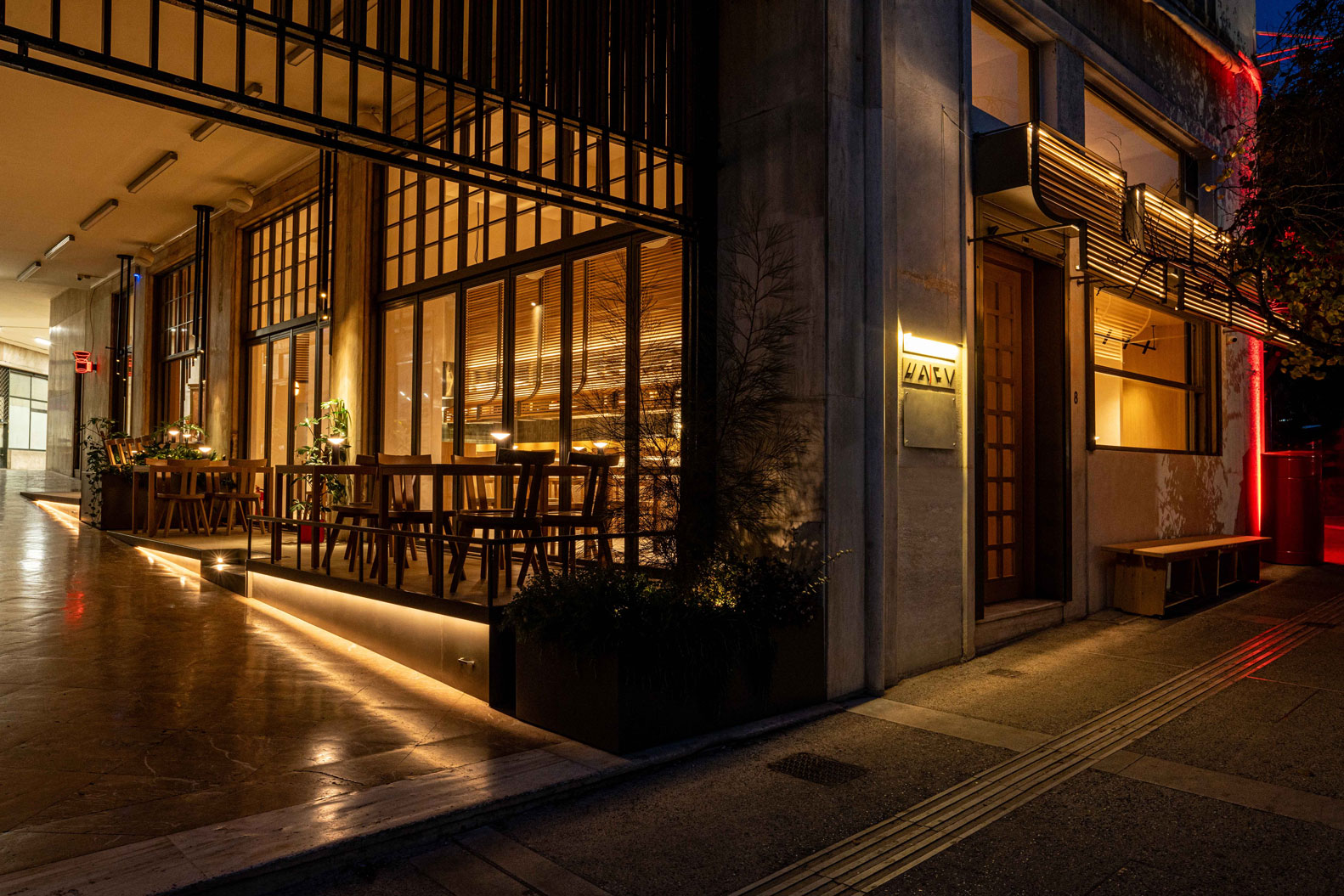
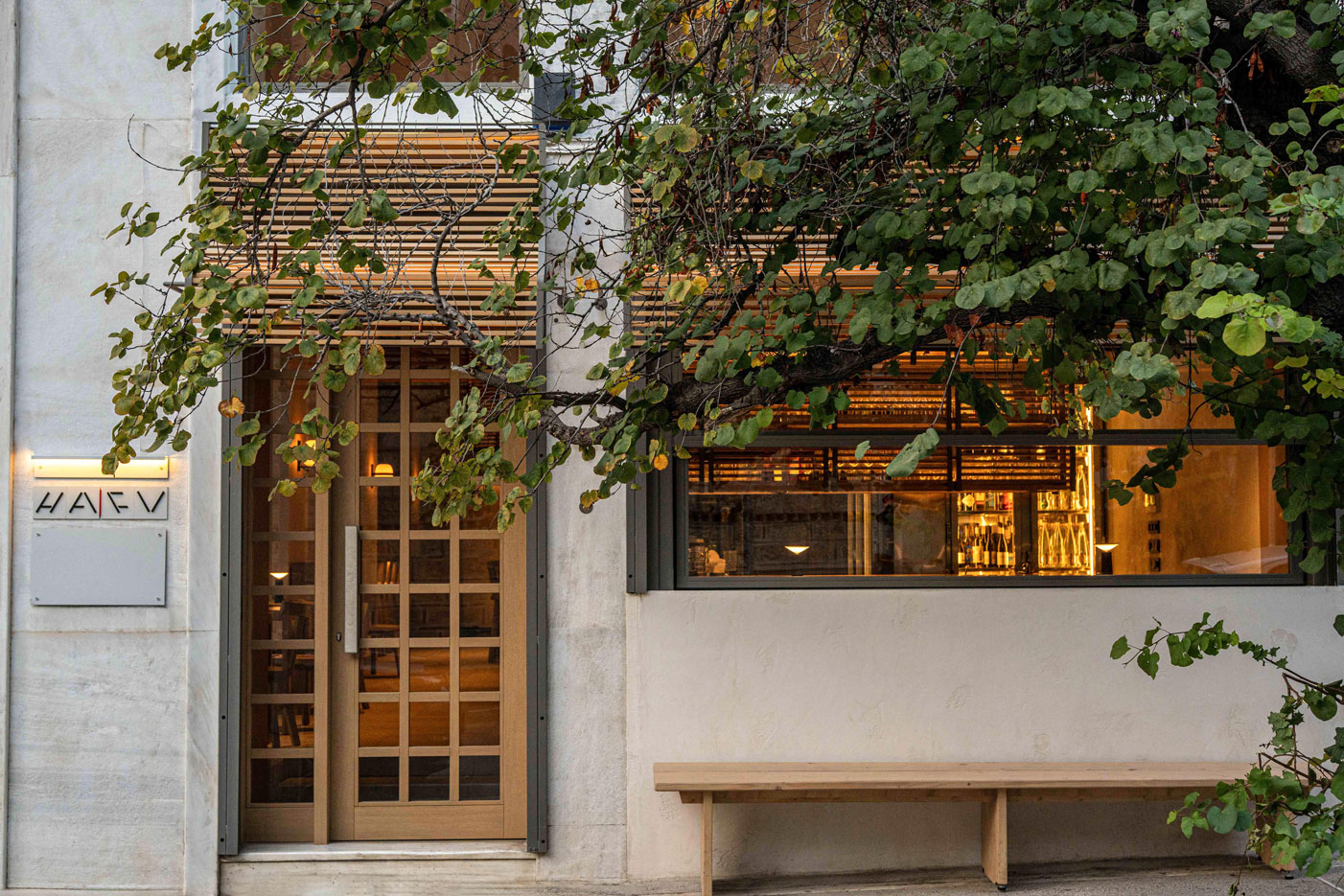
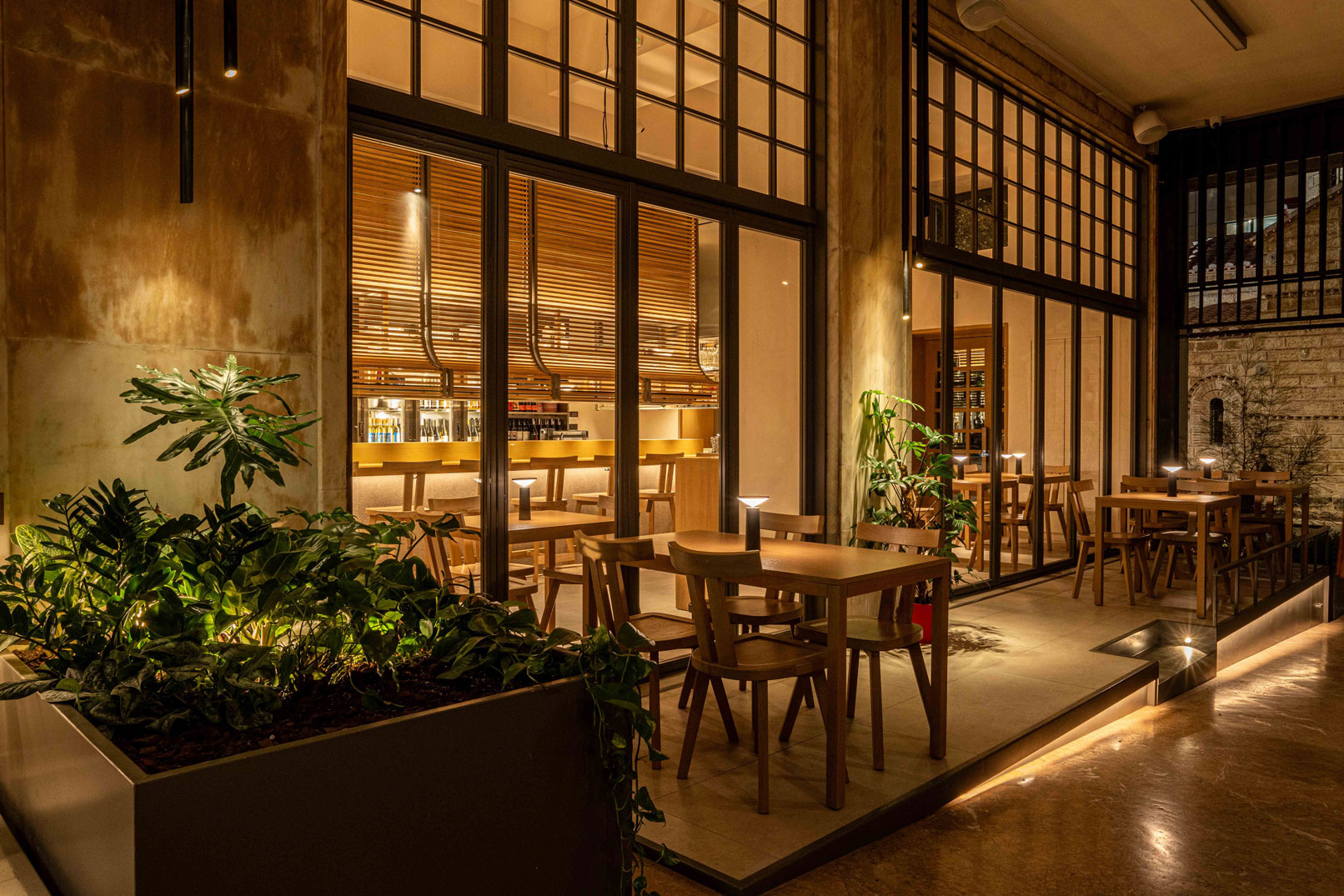
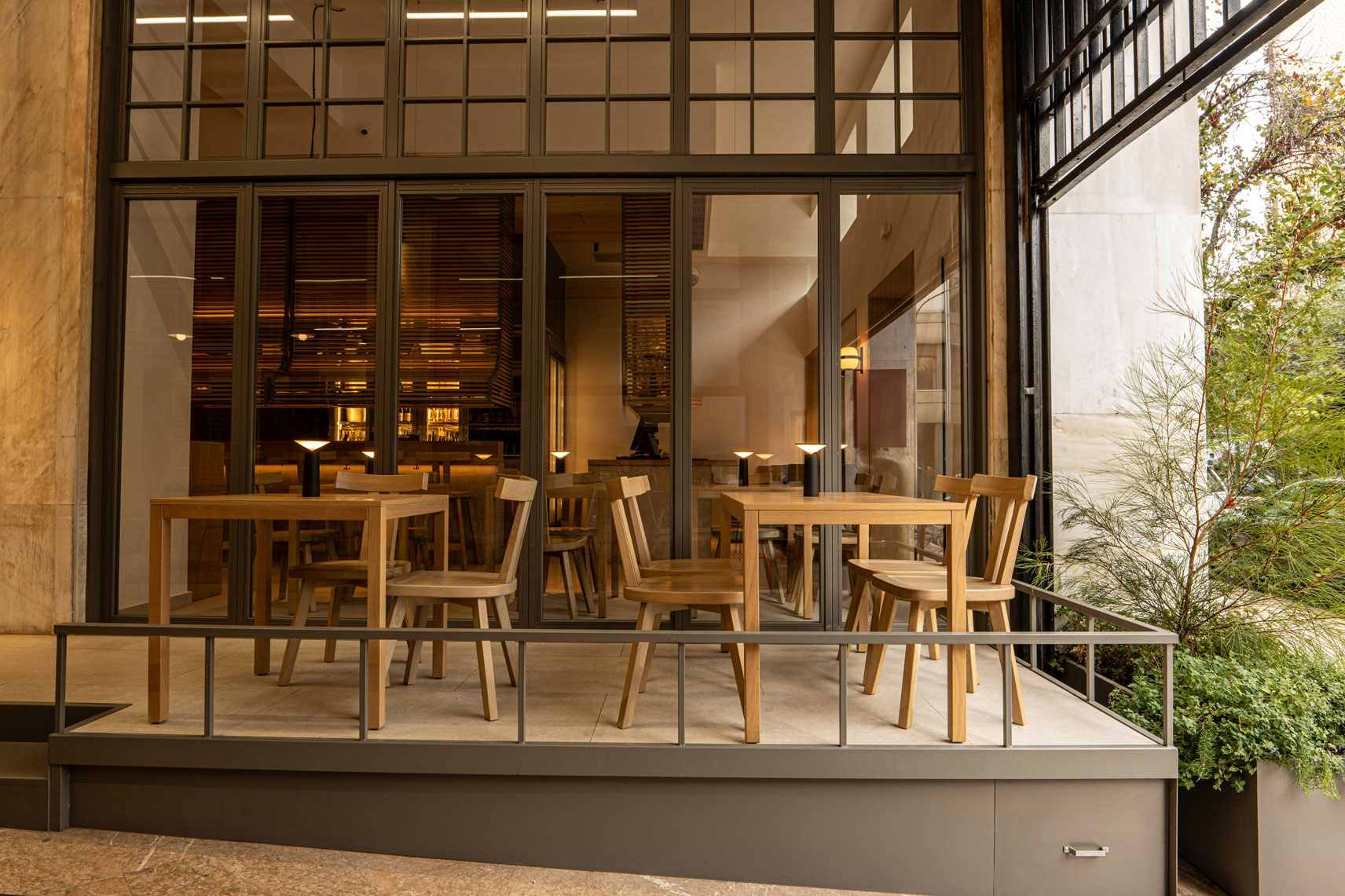
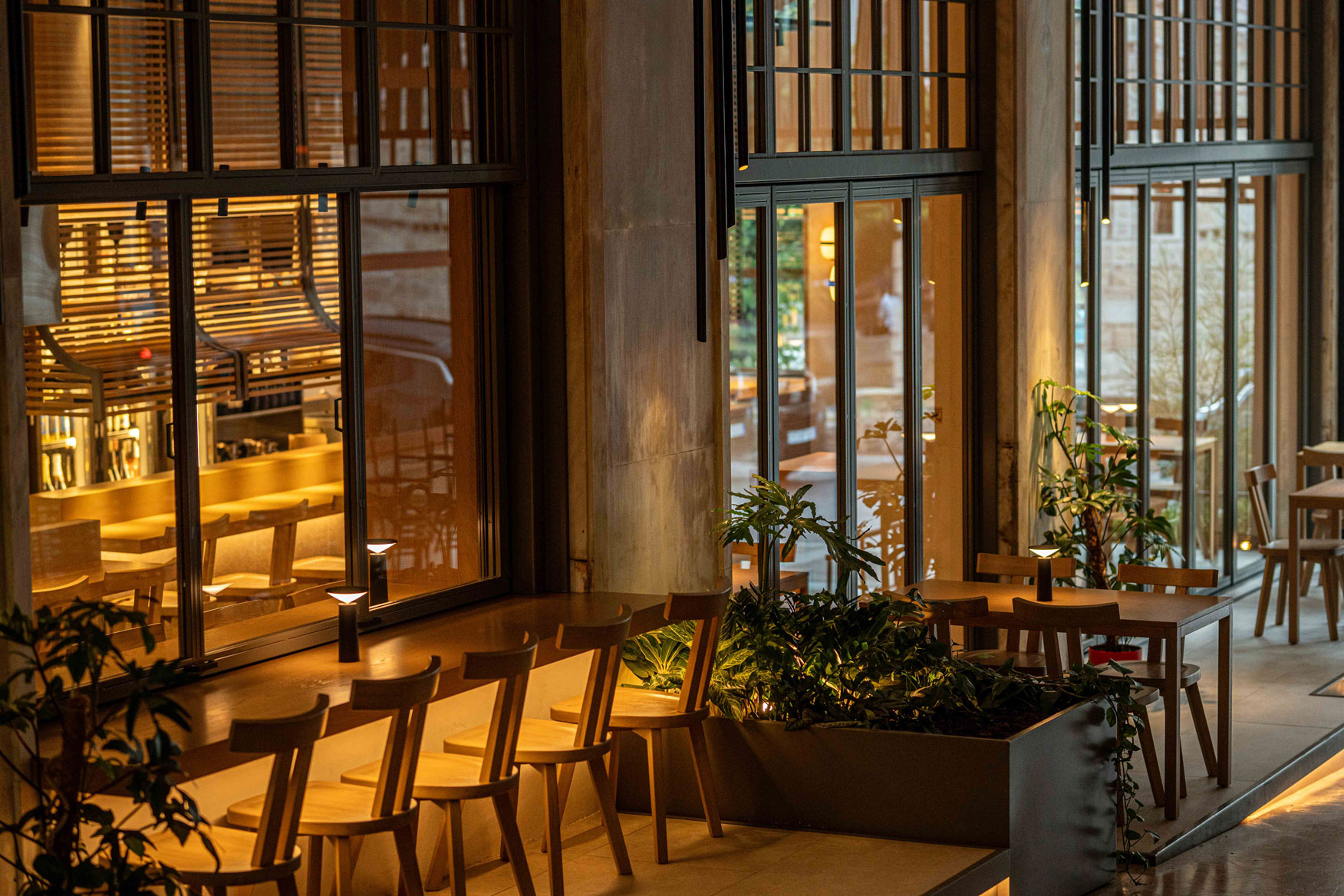
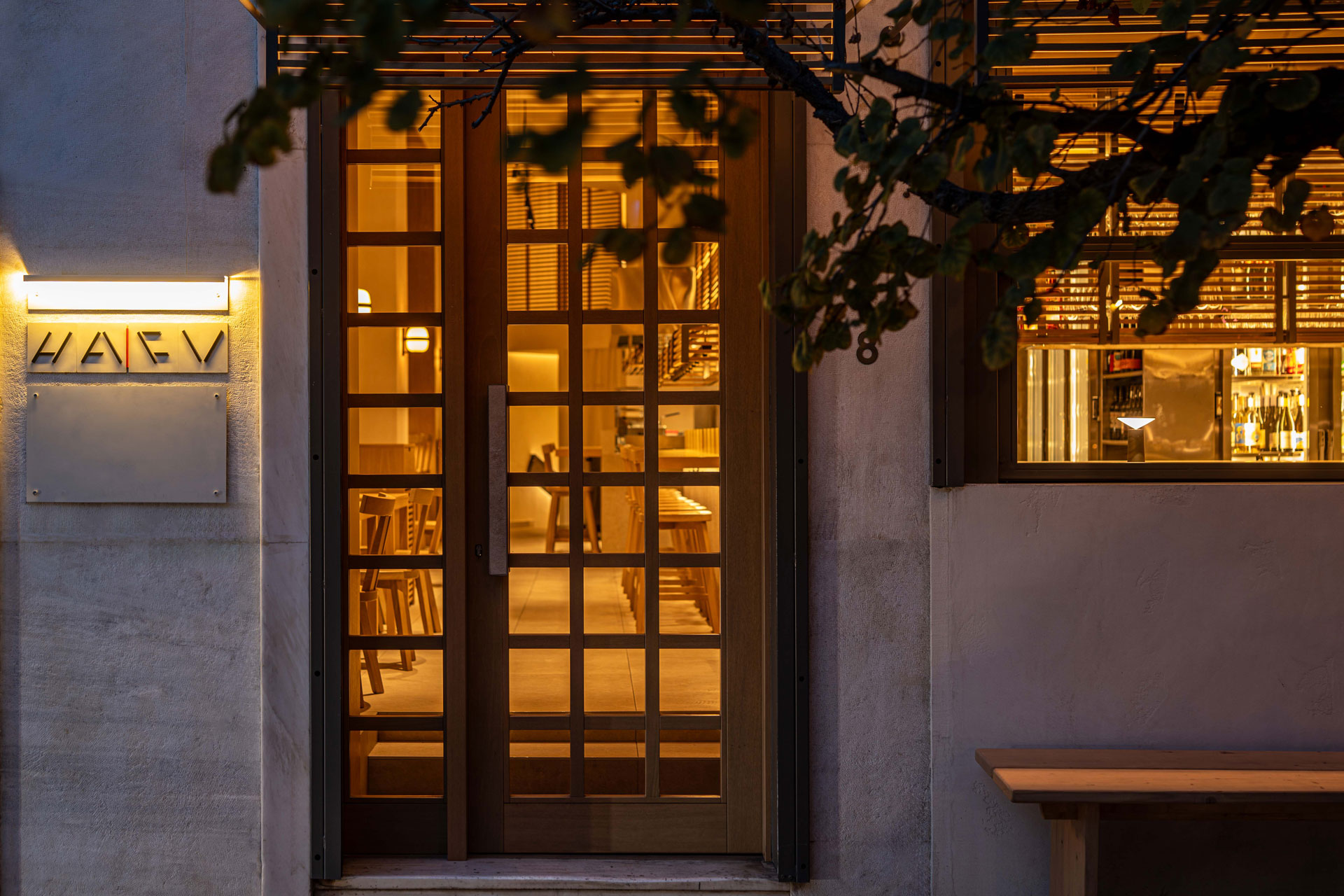
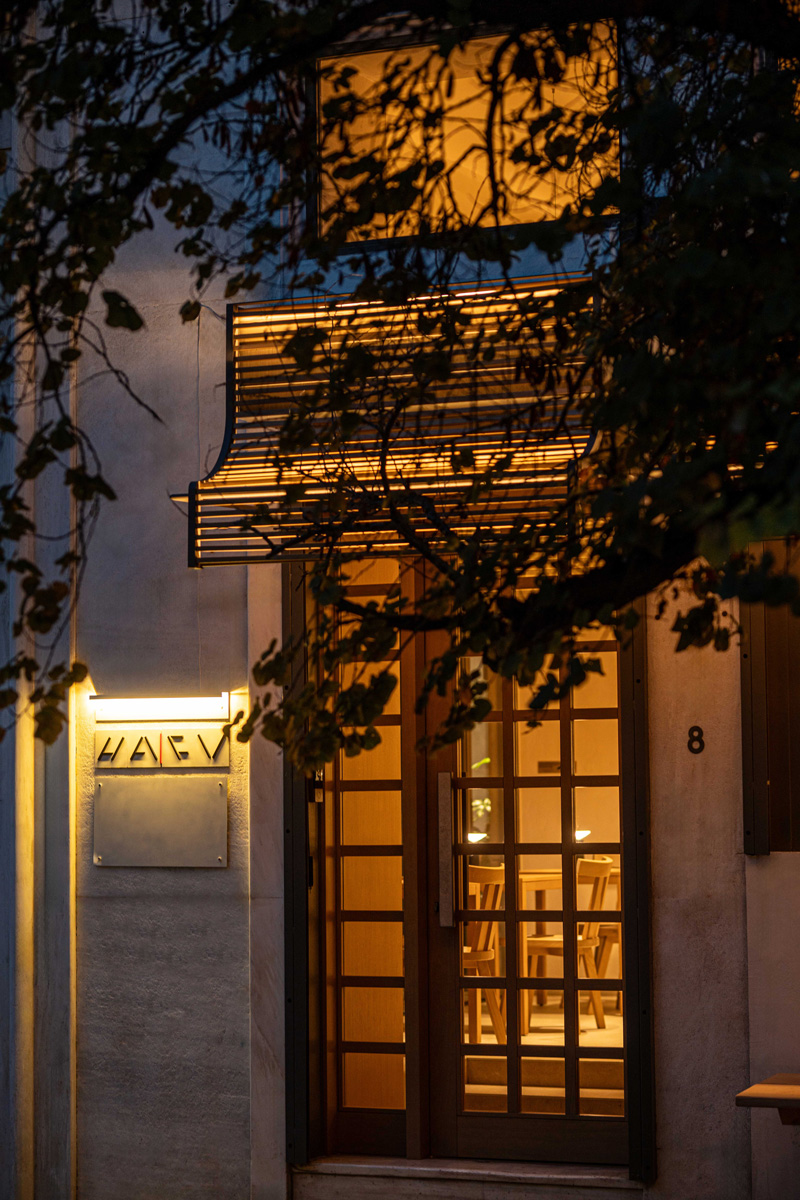
The design of the Hafu restaurant seeks to reinterpret the urban arcade as a place of encounter and transition — an in-between space where the incidental becomes experience and the everyday is transformed into ritual. In the heart of Athens, where the paths of the old and the contemporary intersect, the restaurant creates a refuge of taste and materiality, bridging the flow of the city with the stillness of hospitality.
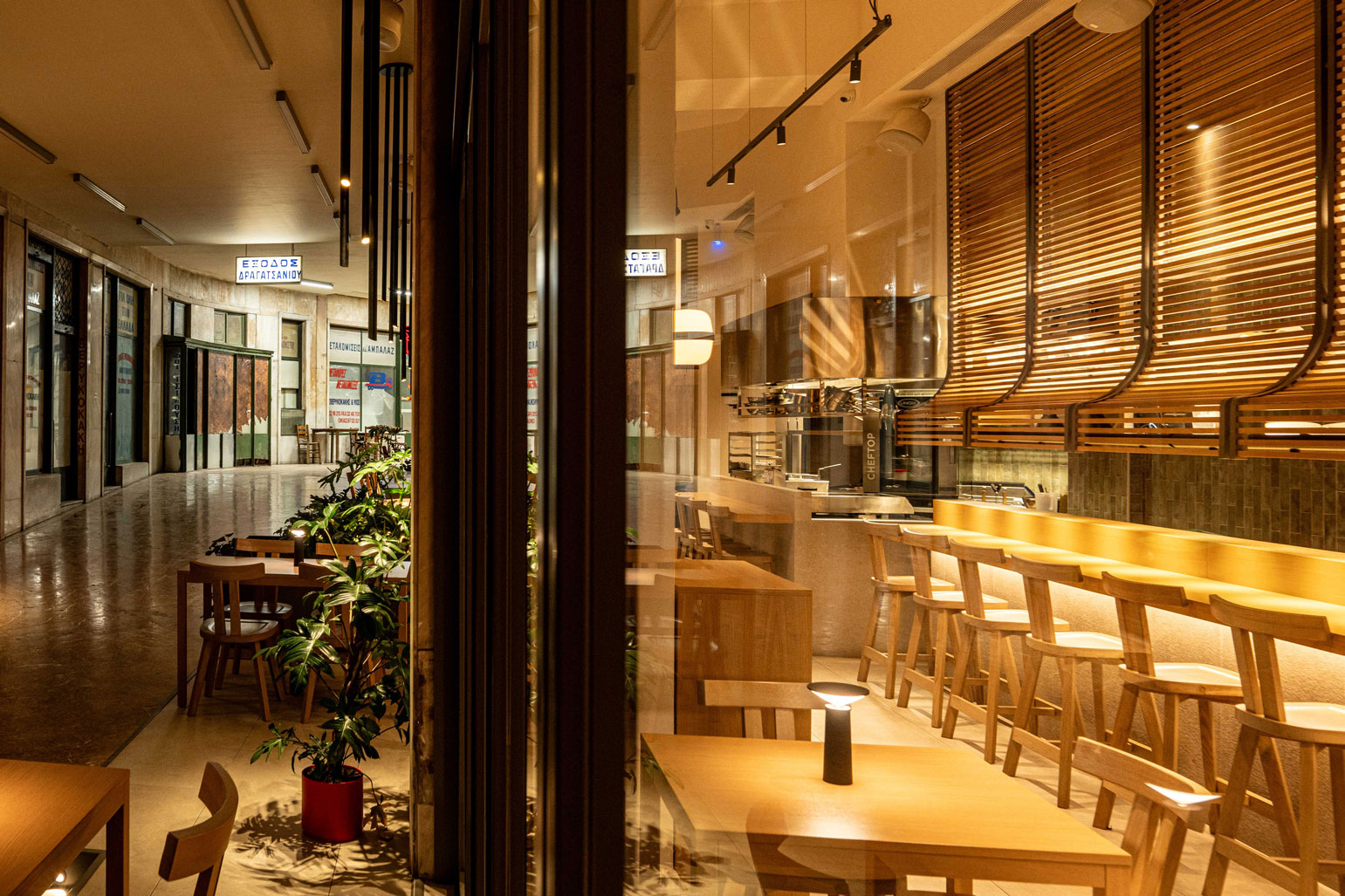
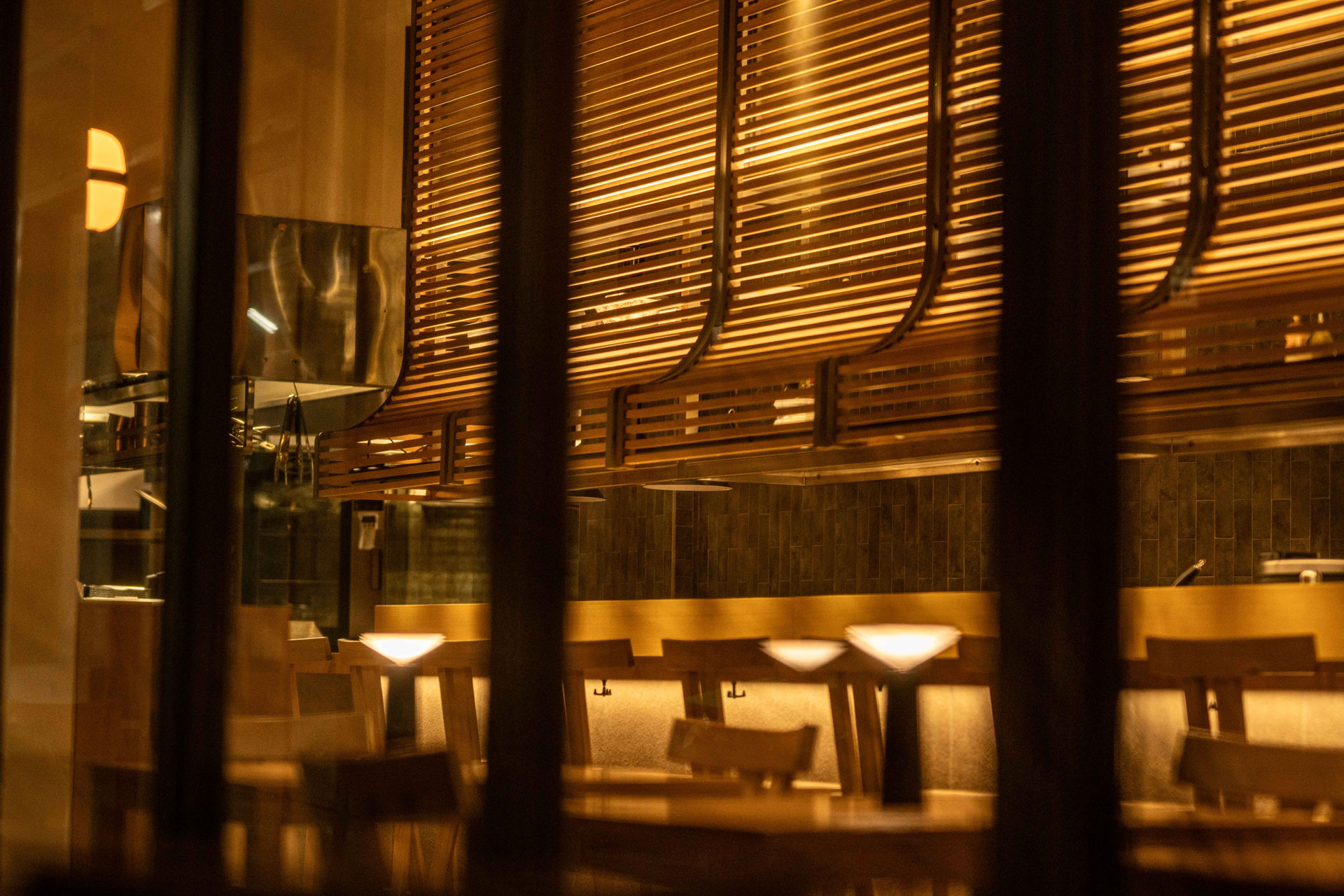
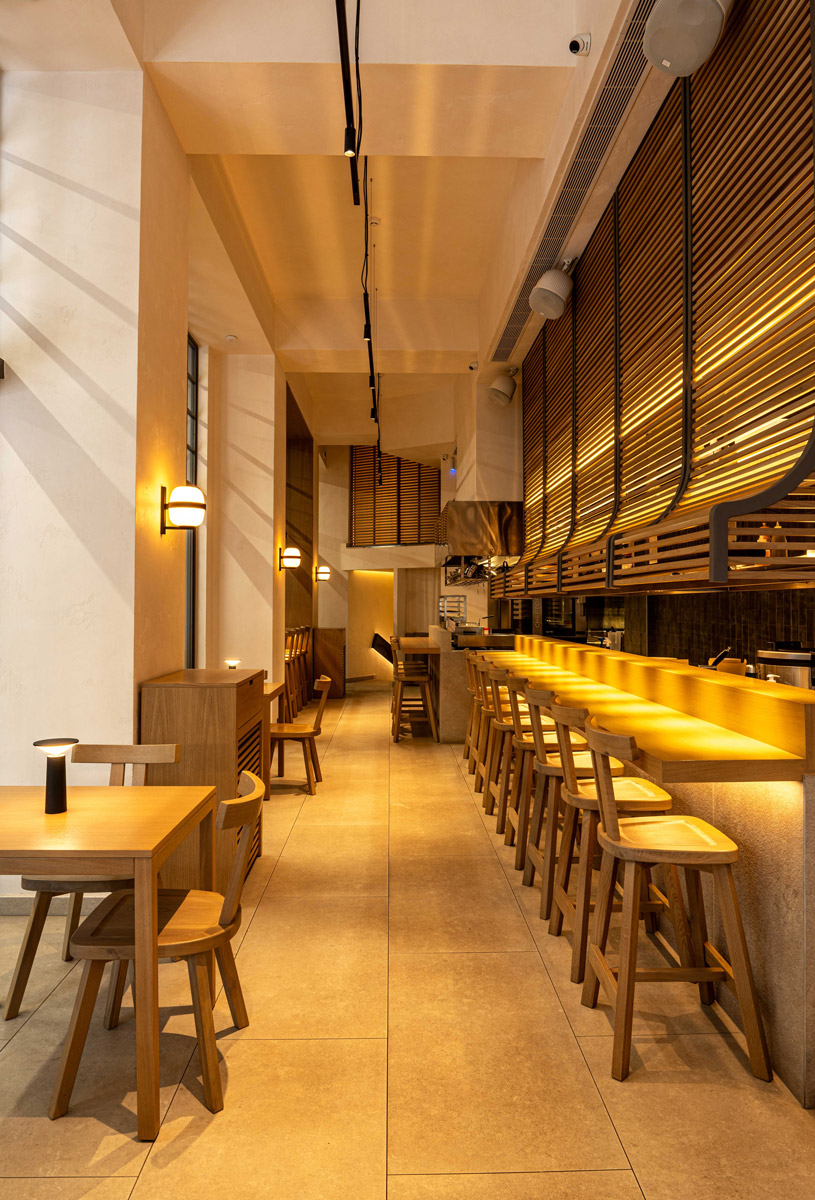
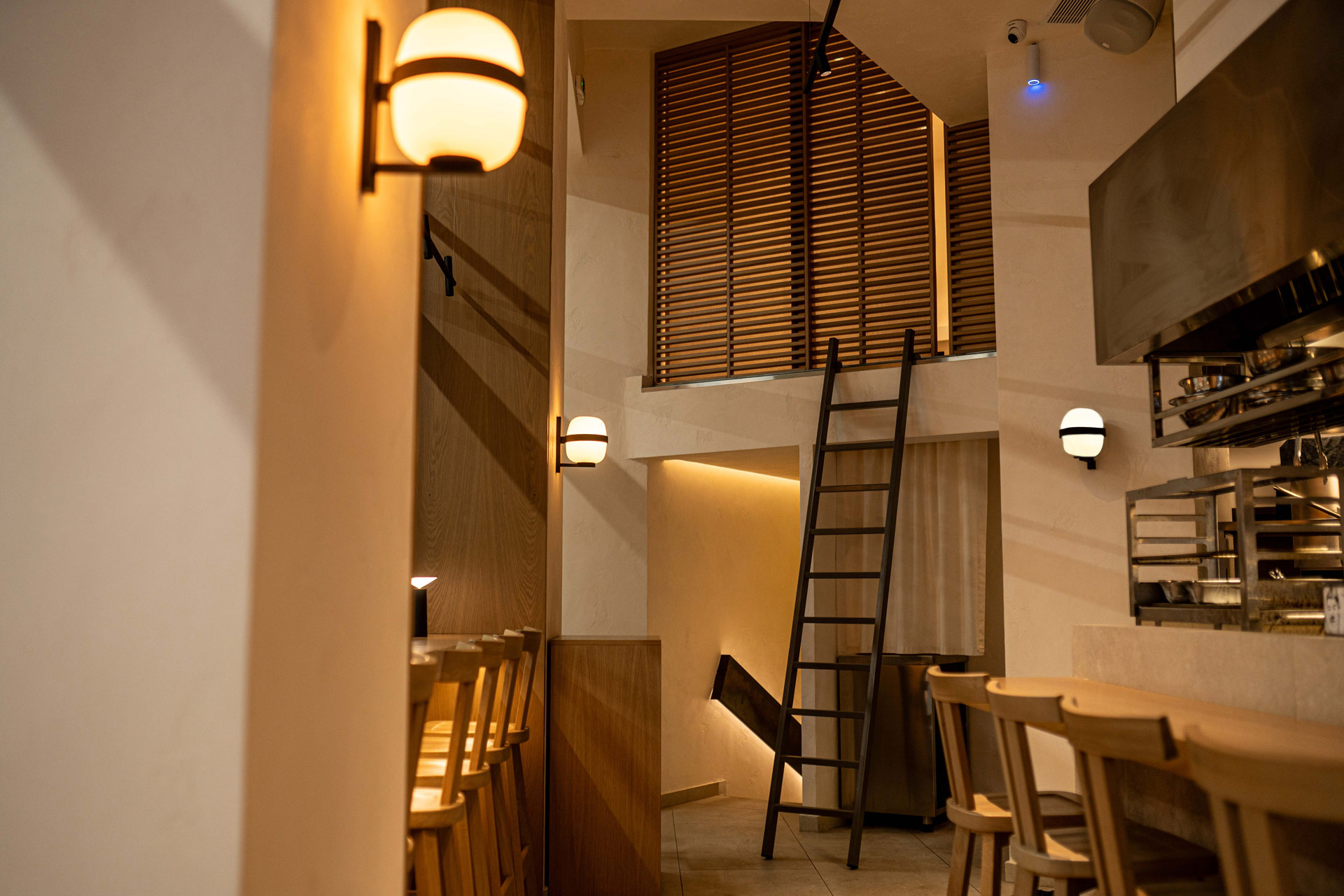
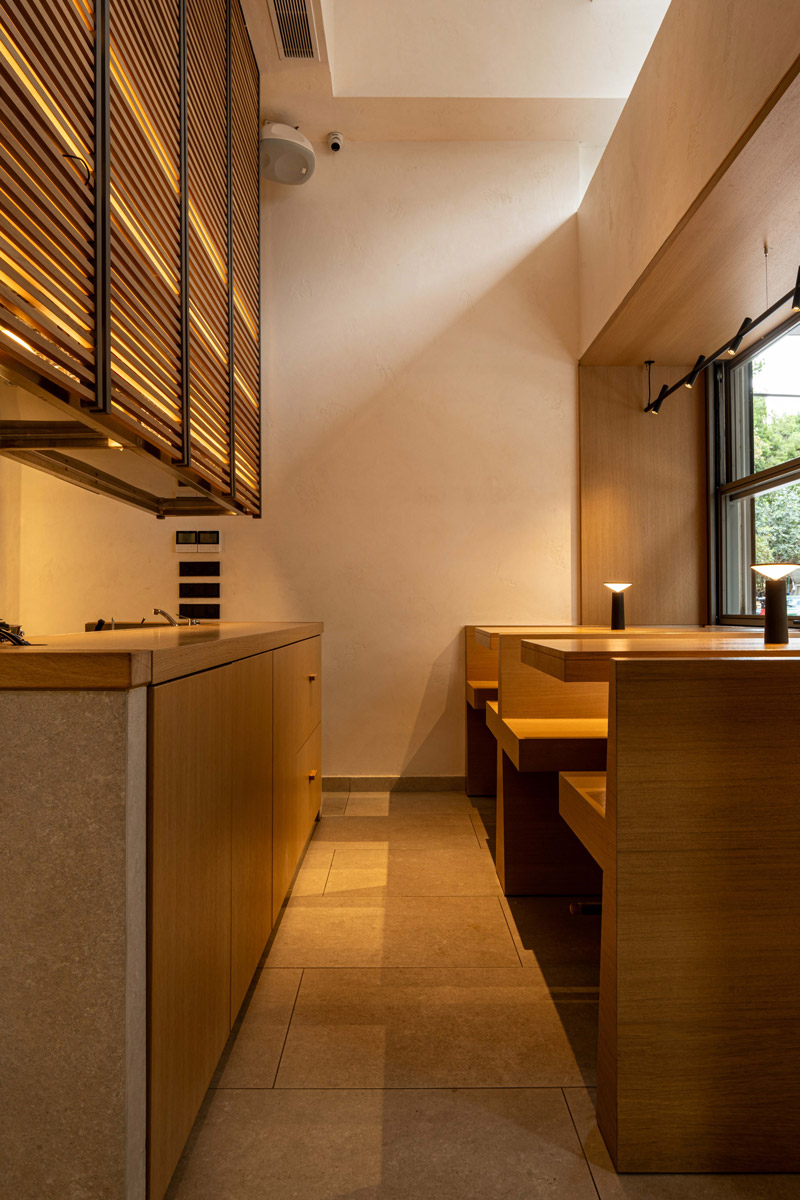
The architectural composition is structured around a dual axis of interpretation: contemplative rigor and warm simplicity. The project respects the existing structure of the arcade, allowing the shell to narrate its own history, while intervening internally through clean, minimal gestures that redefine the relationship between light, matter, and the body. A system of three free-standing islands is designed within space, around which all activity unfolds. The restaurant becomes an architectural narrative of the senses and a meeting point of two worlds. Kitchen and dining area coexist. Movement between the islands, the counters, and the small seating alcoves evokes a quiet curiosity — as if one is constantly discovering new details, while a ritual unfolds before us.
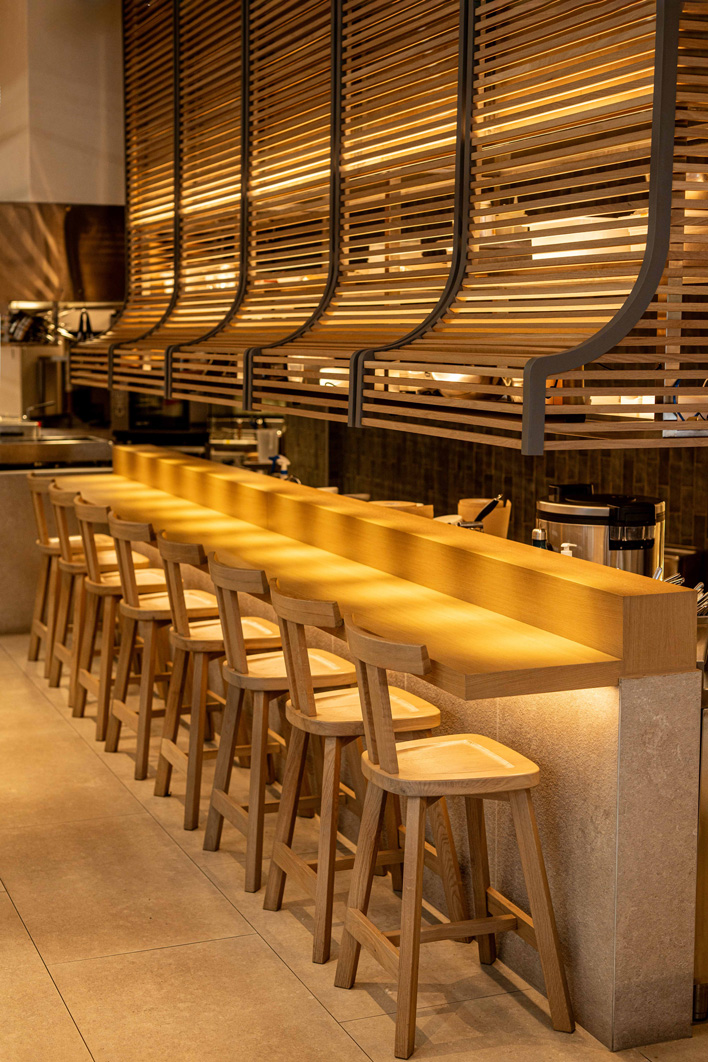
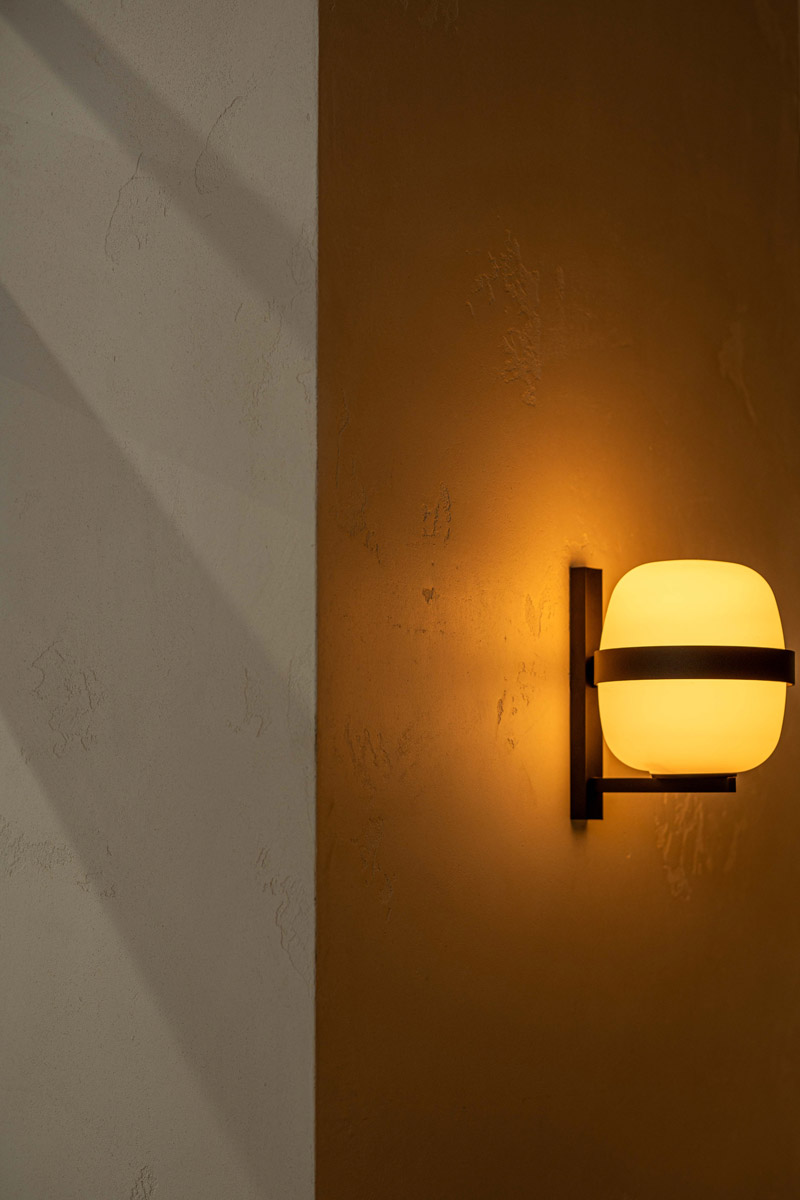
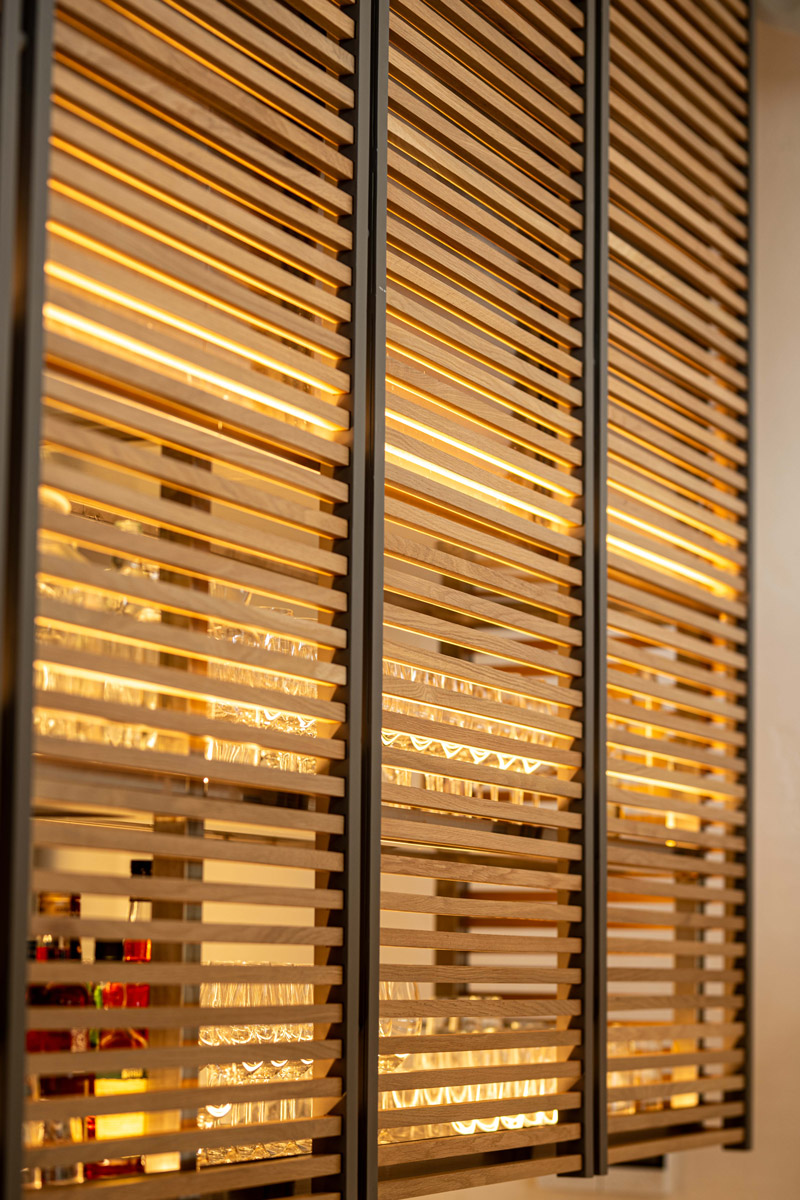
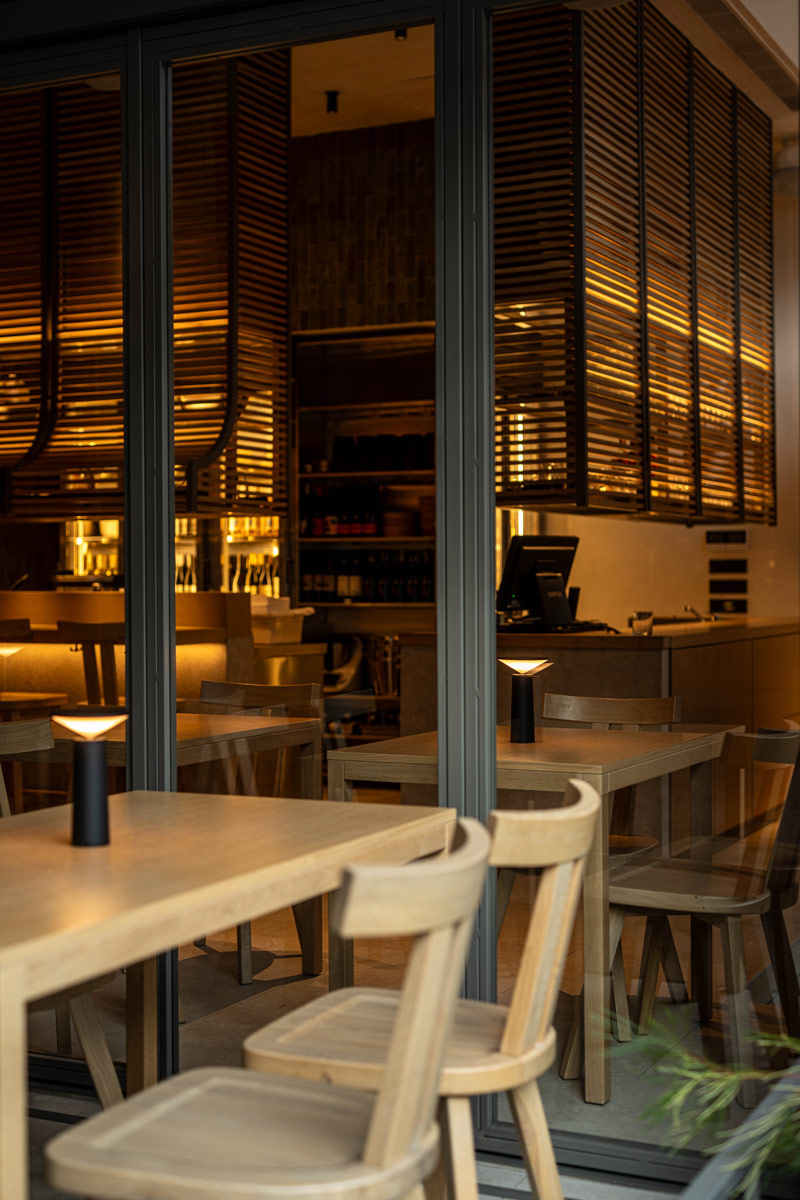
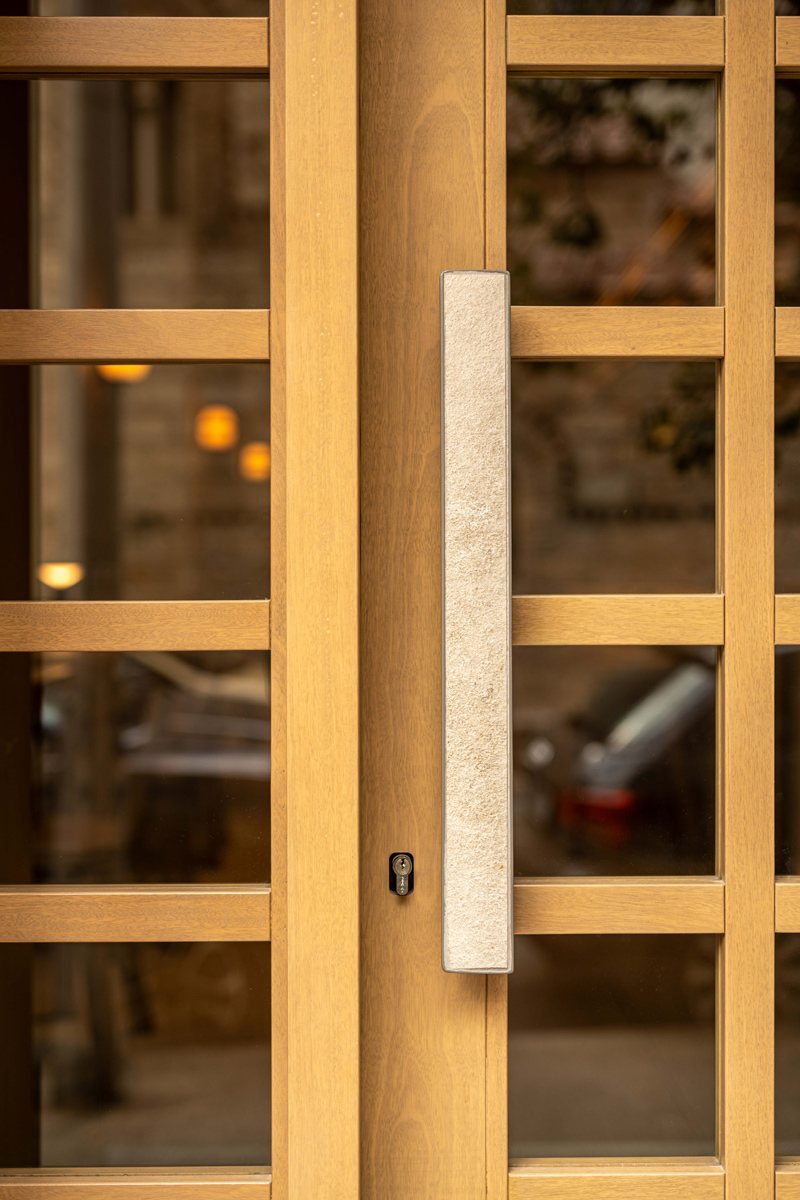
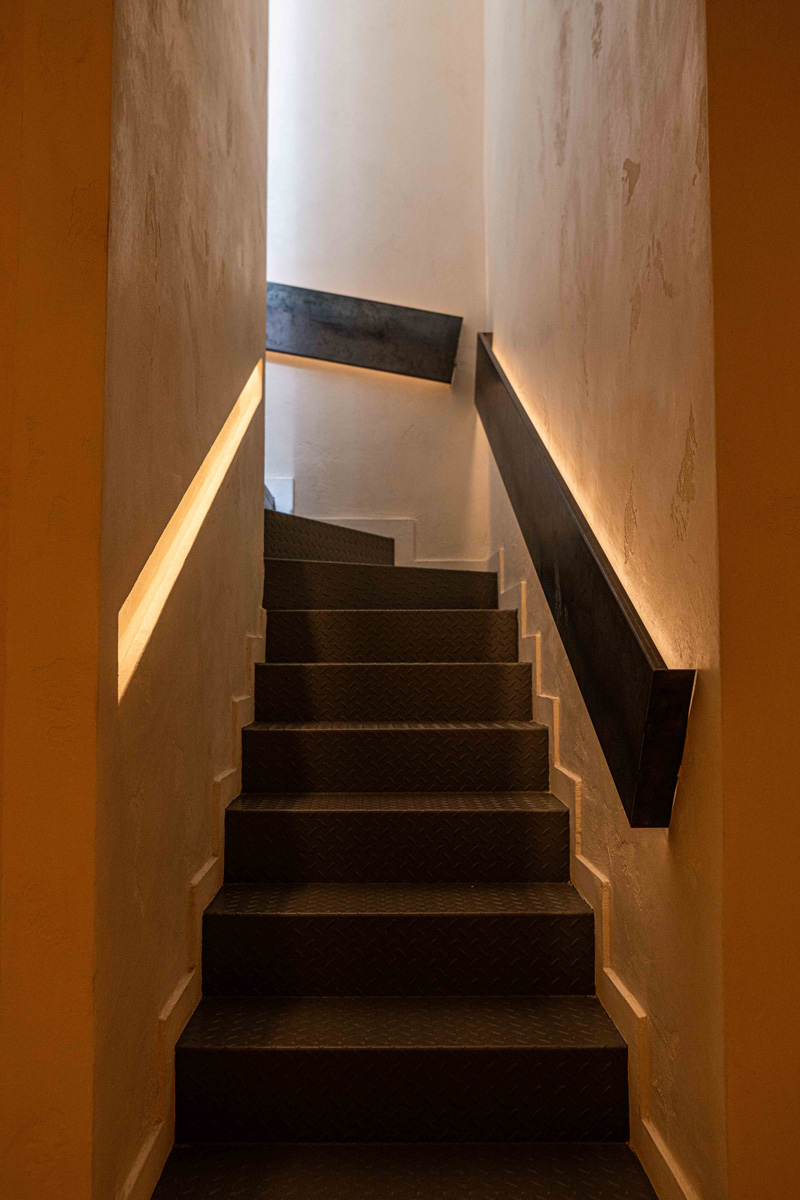
The space breathes through dualities and contrasts, as suggested by the restaurant’s name, HAFU: East meets West. Perforated wooden partitions on the islands create gradients of visual connection between inside and out. The clarity of Japanese lines and the austerity of metal elements enter into dialogue with the warm tones of Greek wood, while the texture of the walls bears the marks of the handmade, drawing references from the wabi-sabi technique — the beauty of imperfection, wear, and the natural. Contemporary and historic elements converse. The color palette remains earthy and light, allowing shadows and natural light to generate depth and movement. The material imprint is layered: rough tiles with the feel of natural stone, warm woods, and cool metal coexist without overpowering one another.
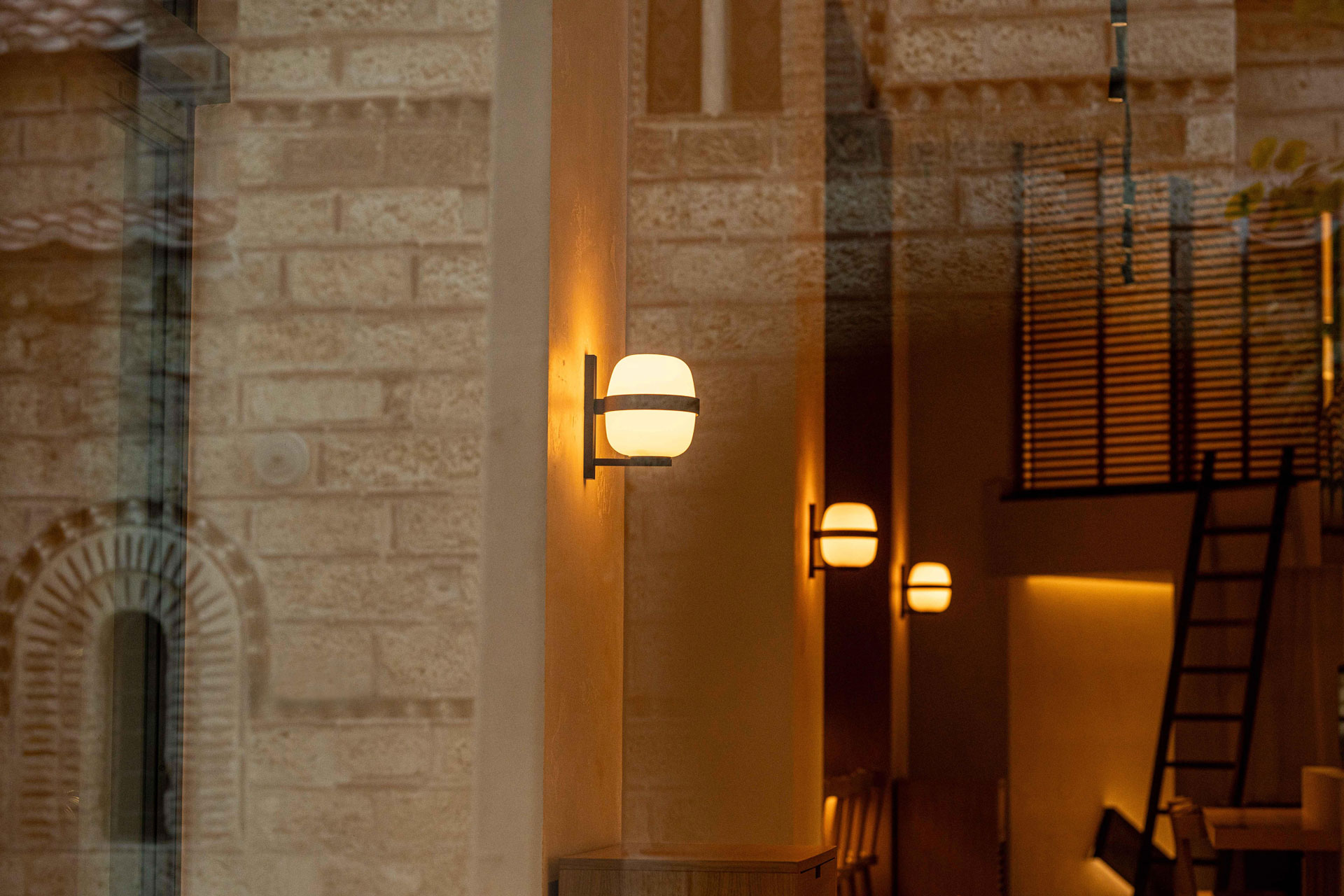
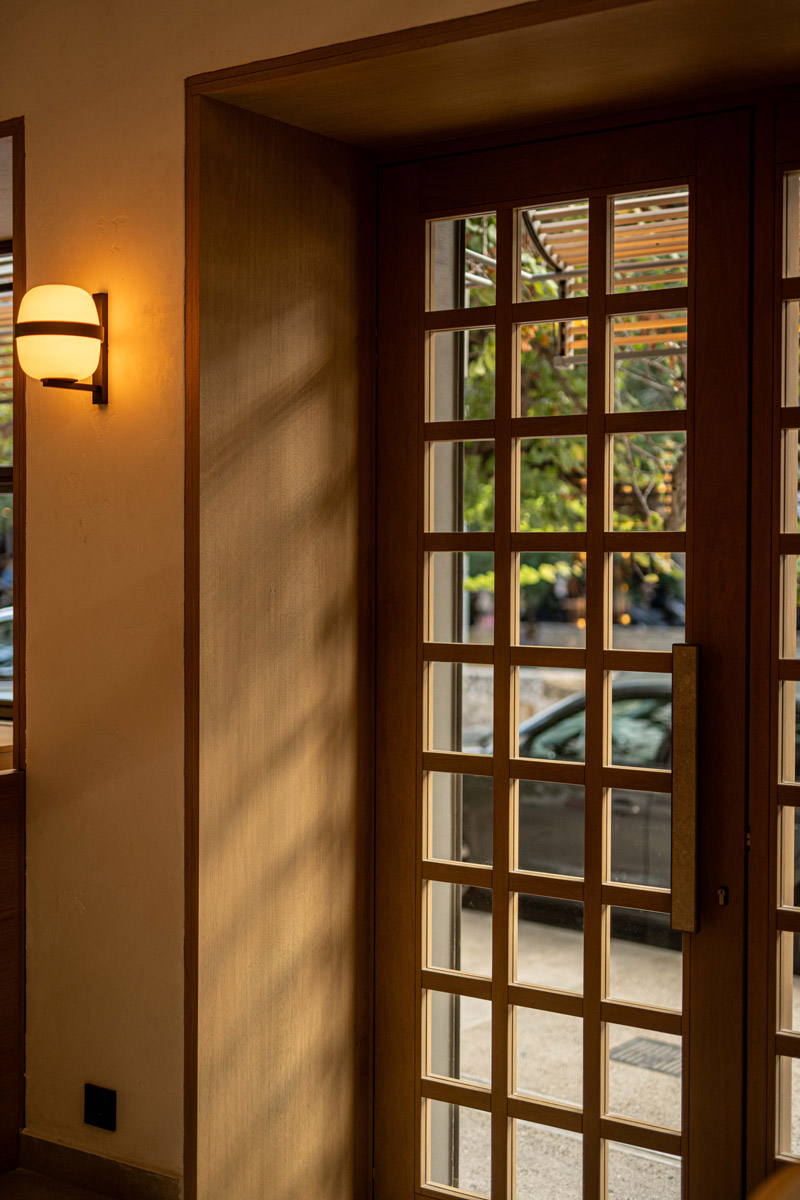
Architecture here guides, directs, and welcomes. Light is diffused from selected points, creating focal landscapes and atmospheres that evolve throughout the day — from the soft light of midday to the low, almost theatrical lighting of dinner.
A space where the philosophy of ma (the Japanese concept of emptiness not as absence but as potential) meets the Greek notion of metron and Xenios Zeus — hospitality and balance.